
Southern Georgia Travel by cruise
Your Guide to a South Georgia Cruise
Imagine standing on a wide, windswept beach surrounded by thousands of king penguins, watching glaciers rise behind them and hearing nothing but wildlife and the ocean. South Georgia is one of the most extraordinary places on earth — wild, remote and unforgettable. For many travelers, it becomes the emotional highlight of their entire Antarctic voyage.
But planning a trip to South Georgia can feel challenging. When should I travel? Which route includes the places I want to see? And how do I choose the right ship, comfort level and itinerary for me?
That’s exactly what we’re here for. On this page, you’ll find clear and practical information to help you understand how to visit South Georgia and what to expect once you’re there. And if you’re still unsure or comparing different options, you can reach out to us directly — calmly, without pressure.
| An Unmatched Wildlife Experience South Georgia is often called the "Serengeti of the South" — home to hundreds of thousands of king penguins, elephant seals, fur seals, and nesting seabirds. The scale of wildlife here is something most travelers describe as overwhelming in the best possible way. | ||
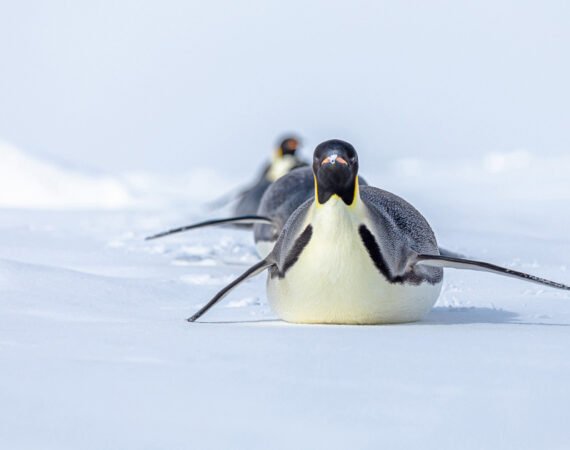
| King Penguins — Up Close If seeing king penguins is on your wish list, there is no better place. Walking through a colony where tens of thousands gather, surrounded by calls and movement, is one of the most unforgettable experiences in the Southern Ocean. | ||
| Strong Historical Significance South Georgia is deeply connected with polar exploration and the story of Sir Ernest Shackleton. Visiting Grytviken, his resting place, adds a meaningful historic dimension to the journey. | ||
| Remote and Very Exclusive Only a small number of expedition ships visit South Georgia each season. Strict landing rules and limited capacity protect the environment — and make every visit feel special, privileged, and deeply memorable. | ||
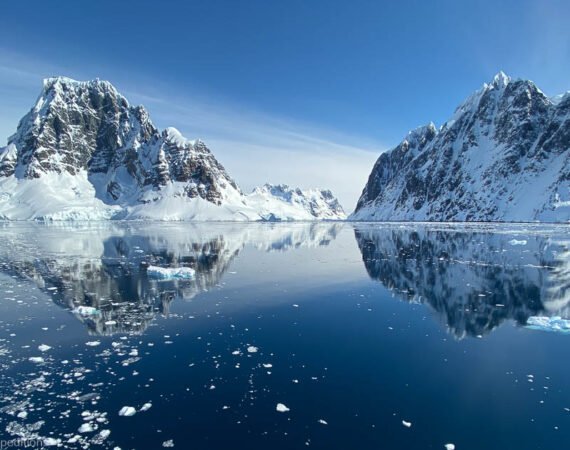
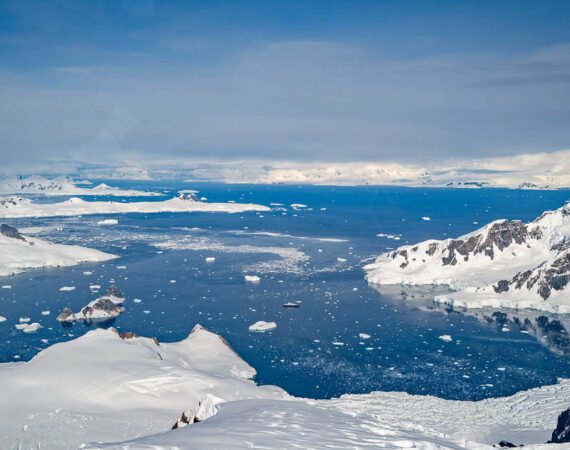
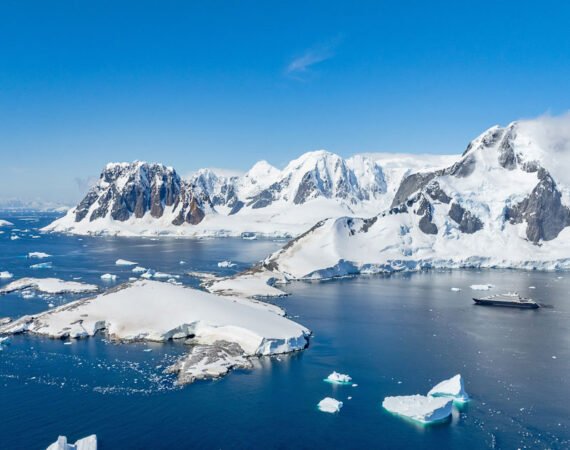
| Breathtaking Landscapes Steep mountain ranges, glaciers, and rugged coastline create dramatic scenery. Whether you are on deck or exploring by zodiac, the landscapes feel wild, untouched, and cinematic. | ||
| Expert-Led Exploration Landings, wildlife encounters, and Zodiac cruises are guided by experienced expedition teams who help you understand wildlife behavior, history, and the changing environment — making the experience richer and more meaningful. |
Highlights of South Georgia
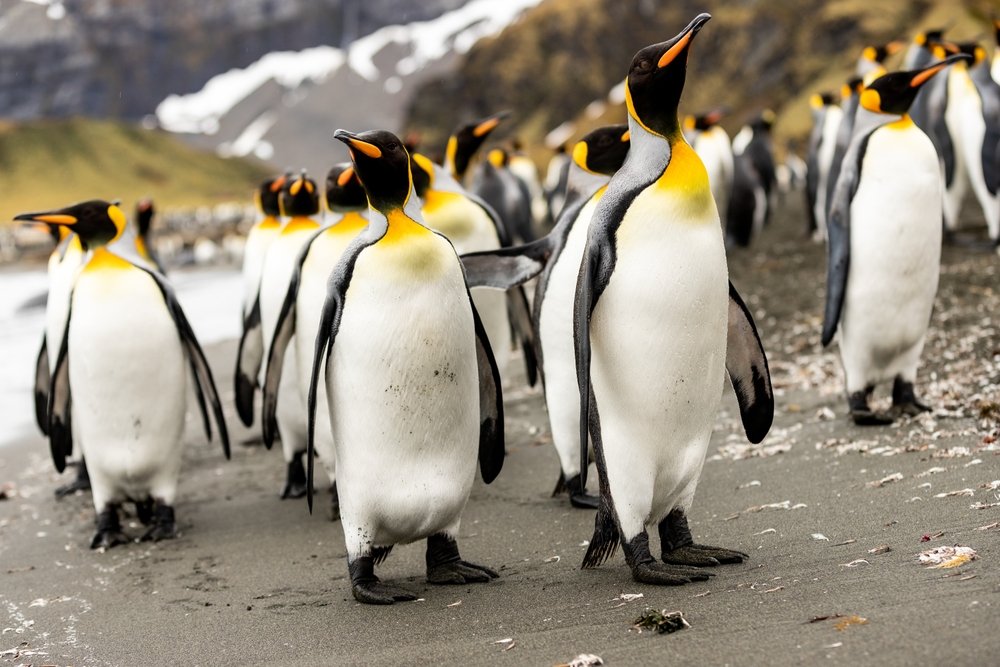
King Penguin Colonies
South Georgia is one of the best places in the world to see king penguins in their natural habitat. Instead of small groups, you’ll find enormous colonies with tens of thousands of birds stretching across the beaches and valleys. The sight, sound, and movement of so many penguins together often becomes the emotional highlight of the entire voyage. Many travelers describe the experience as overwhelming in scale — something photos simply can’t prepare you for.

Wildlife Encounters
The island is sometimes called the “Galápagos of the Southern Ocean” because of its remarkable biodiversity. Elephant seals battle for territory, fur seals line the beaches, and albatross glide effortlessly above the cliffs and waves. Depending on the timing of your journey, you may see young penguin chicks, courting birds, or whales feeding in the surrounding waters. Every landing feels alive, and wildlife is often just a few steps — or sometimes only a few meters — away.

Shackleton’s Legacy
South Georgia holds an important chapter of Antarctic history. This is where Sir Ernest Shackleton completed his legendary rescue journey after the loss of his ship, the Endurance. Visiting Grytviken, where Shackleton is buried, adds a deep sense of meaning to the voyage. Standing at his grave, surrounded by icy peaks and history, connects many travelers with the spirit of polar exploration in a way few destinations can offer.
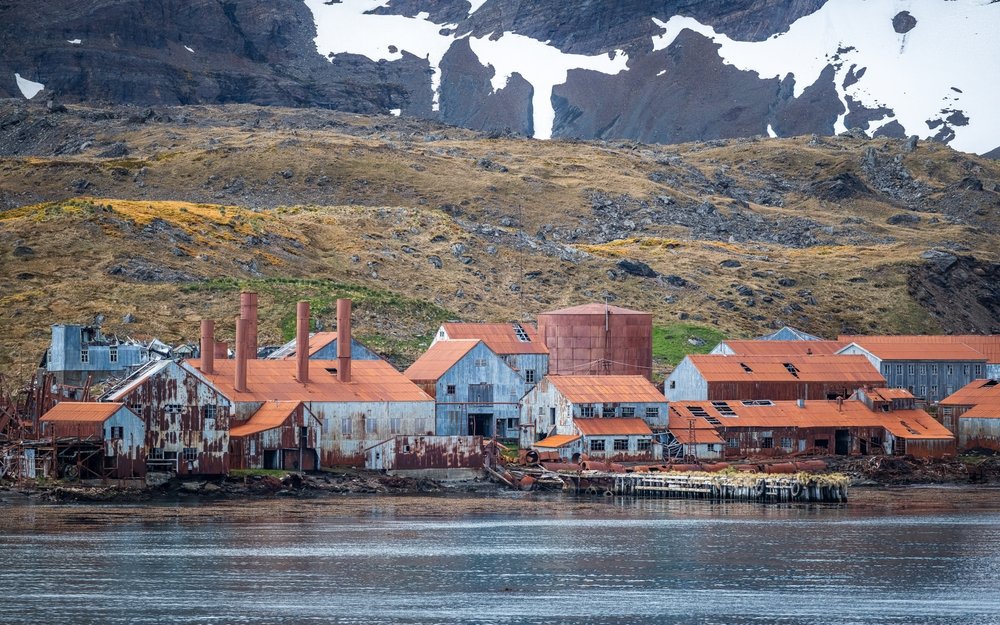
History & Human Stories
Beyond Shackleton, South Georgia also tells the story of the early whaling era, scientific research, and the long process of restoring wildlife after decades of human activity. Historic stations, rusted structures, and abandoned settlements now sit quietly in the landscape — reminders of how harsh life once was here. Today, nature has reclaimed the island, and seeing this transformation creates a powerful contrast between past exploitation and modern conservation.
When to Go to South Georgia
South Georgia can be visited only during the austral summer, from late October until late March. During these months, the weather is at its mildest, daylight hours are long, and conditions are suitable for landings and wildlife viewing. Even then, the climate remains changeable — part of the true expedition experience. Photographers especially appreciate the soft light, long days, and snow-free shorelines later in the season.
Wildlife changes noticeably throughout the summer, so the best time depends on what you hope to see:
Late October to November
This is the energetic start of the season. Elephant seal bulls compete on the beaches, fur seals begin claiming territory, and seabirds return to nest. Early king penguin breeding activity begins, and the island still feels wild and untouched after winter.
December to January
Wildlife activity reaches its peak. Fur seals may crowd some landing areas, and penguin colonies are full of life. Gentoo, chinstrap, and macaroni penguin chicks are hatching, making this a wonderful period for close observation and photography.
February to March
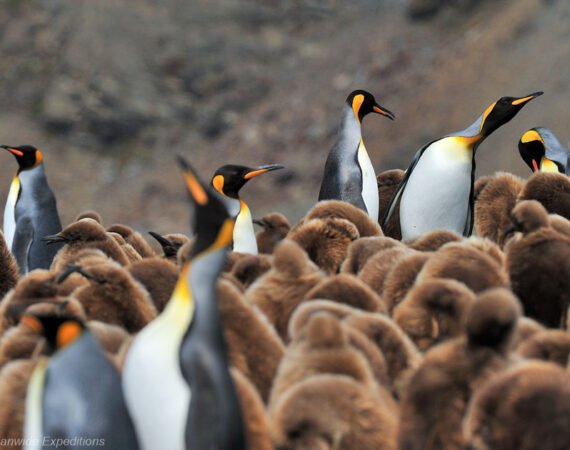
Later in the season, fur seal pups and moulting elephant seals dominate the shores. King penguin chicks are large and fluffy, preparing for their first winter. Offshore, humpback whales become more frequent as feeding season intensifies.
If you’re unsure which month fits your interests — wildlife, photography, calmer seas or historical sites — we’re happy to guide you. Just tell us your preferred travel window, and we’ll help find the itinerary that aligns best with your expectations.
→ Want personalized advice? We’ll compare ships, dates, and wildlife timing for you.

“South Georgia is one of the most remote and striking destinations on our planet. You travel to a place where millions of penguins, seals, seabirds and whales share a dramatic landscape of glaciers and mountains — and where some of the most significant historic sites of Antarctic exploration can still be visited today.”
Meinhard Mooslechner
Polar Travel Expert
Best Trips to a South Georgia Cruise


Ready for the adventure of your life?
Reach out to us today and receive independent, expert guidance from passionate polar specialists who will assist you every step of the way from choosing the right expedition to booking and planning every detail of your journey. Here’s How It Works:
Listen & Advise
We listen and find out which ships, which routes and which price best suit your needs.
Reserve & Relax
Your cabin is reserved for at least 72 hours while you discuss the final details of your trip.
Prepare & Explore
You will receive expert packing tips, insider tips and more so that you can leave optimally prepared.
People Also Ask about a South Georgia Cruise
Yes, visitors can travel to South Georgia, but only by expedition ship. There are no commercial airports, settlements, or regular passenger transport. Tourism is carefully regulated to protect the environment, and only a limited number of ships visit the island each season. If you plan to travel there, joining an expedition cruise is the safest and most practical way.
Absolutely. Many travelers say that South Georgia is one of the most unforgettable parts of the entire Southern Ocean. The combination of enormous king penguin colonies, dramatic landscapes, unique wildlife density, and important historic sites makes the island unlike any other destination in Antarctica. If wildlife and remote nature are priorities, South Georgia is often considered essential.
South Georgia and the South Sandwich Islands are a British Overseas Territory. The islands are administered from the United Kingdom and have no permanent civilian population. Only scientists, government staff, and seasonal expedition teams stay temporarily.
South Georgia is known for its exceptional wildlife and for its connection to polar exploration. It is home to some of the largest king penguin colonies in the world and massive seal and seabird populations. The island is also strongly linked to the history of Sir Ernest Shackleton and the Endurance expedition, making it a meaningful stop for travelers interested in Antarctic history.
There are no cities or permanent towns on South Georgia. The island is remote, uninhabited, and fully protected. Only a few research and government stations exist, and they are not residential communities.
The only administrative center is King Edward Point, located near Grytviken. It is not a city, but a small research and government station with a rotating population.
Yes, there are itineraries that visit only South Georgia or only the Falkland Islands, although most voyages combine multiple destinations. The most common routes include South Georgia with the Antarctic Peninsula and Falklands. If you prefer a shorter route, or only one region, we can help you compare available departures.
South Georgia has no towns. The closest equivalent is Grytviken, a former whaling station that now serves as a historic site and museum. Visitors can walk among restored buildings and Shackleton’s grave during a landing.
The island was named in 1775 by Captain James Cook, who claimed it for Britain and named it in honor of King George III.