Antarctic Krill

Written by

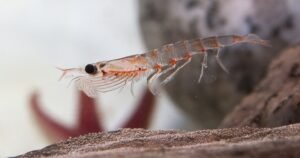
Tiny, translucent, and often overlooked: Antarctic krill (Euphausia superba) are the true foundation of life in the Southern Ocean. These small crustaceans, no larger than a paperclip, form massive swarms that can stretch for kilometers beneath the icy surface. Every creature in Antarctica, from the mighty blue whale to penguins, seals, and seabirds, depends on krill for survival.

Despite their size, krill are giants in importance. They drive the entire Antarctic food web, recycle nutrients, and even influence the global climate by storing carbon deep in the ocean. To understand Antarctica, you must first understand its smallest inhabitant: the krill.

Let’s dive deeper into the world of Antarctic krill and discover why these tiny creatures are the heartbeat of the polar ecosystem.

What Is Antarctic Krill?

Antarctic krill (Euphausia superba) are small, shrimp-like crustaceans that live in the cold waters of the Southern Ocean surrounding Antarctica. They typically measure around 5–6 centimeters and weigh just 1–2 grams, yet they exist in such enormous numbers that their combined biomass is greater than that of all humans on Earth.

Krill feed on phytoplankton — microscopic plants that grow beneath the sea ice during the Antarctic summer. By eating plankton and being eaten by whales, seals, penguins, and fish, krill form the essential link between the smallest and largest organisms in the Antarctic ecosystem.

Their swarms can be so dense that they’re visible from space, glowing red beneath the ice as millions move together in synchronized waves — a living pulse beneath the frozen surface.

More info

Antarctic krill (Euphausia superba)

9 Facts About Antarctic Krill


  • Scientific name:Euphausia superba — one of about 85 krill species in the world.
  • Size: Up to 6 cm long and around 2 grams in weight, yet form massive swarms across the Southern Ocean.
  • Population: Estimated 300–500 million tons of krill live around Antarctica, making them one of the most abundant animal species on Earth.
  • Diet: Feed primarily on phytoplankton and algae, using fine comb-like limbs to filter food from the water.
  • Lifespan: Usually 5–7 years, depending on water temperature and food availability.
  • Habitat: Found mainly under sea ice, which provides both shelter and a feeding ground.
  • Predators: Almost every Antarctic animal — including whales, seals, penguins, and fish — relies on krill as their main food source.
  • Carbon storage: Krill help fight climate change by consuming carbon-rich plankton and transferring carbon to deep ocean layers through their waste.
  • Behavior: At night, krill rise toward the surface to feed, and during the day, they dive deeper to avoid predators — a process called vertical migration.

Why Is Krill So Important to Antarctica’s Ecosystem?


Krill are the foundation of Antarctica’s entire food web. Though tiny, they sustain nearly every major animal species in the Southern Ocean — from penguins and seals to whales and seabirds. Without krill, life in Antarctica would simply collapse.

  • Main food source: Krill are the primary diet of whales, seals, penguins, and many fish species. A single blue whale can eat up to 4 tons of krill per day.
  • Nutrient recycling: By feeding on phytoplankton and excreting nutrient-rich waste, krill help fertilize the ocean, supporting plankton growth.
  • Climate regulation: Krill contribute to the biological carbon pump, locking carbon deep in the sea and reducing greenhouse gases in the atmosphere.
  • Indicator of ocean health: Changes in krill populations directly affect other species — making them a key measure of ecosystem stability in the Southern Ocean.
  • Essential for biodiversity: Krill swarms create feeding hotspots that attract thousands of animals, shaping the rich wildlife encounters seen on Antarctica cruises.

Where Can You See Krill in Antarctica?


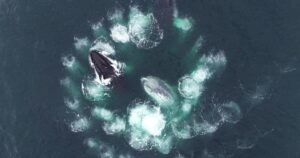
Although krill live beneath the ocean surface, travelers can often witness their presence indirectly, through the abundance of wildlife they attract. The best places to see krill activity are where whales, seals, and penguins gather to feed during the Antarctic summer.

  • Antarctic Peninsula: The most productive krill feeding grounds: perfect for spotting humpback whales, minke whales, and penguin colonies.
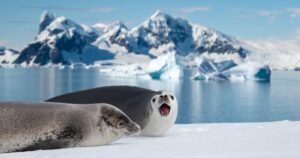
  • Weddell Sea: Known for dense krill populations beneath the pack ice, attracting leopard seals and Adélie penguins.
  • South Georgia Island: A hotspot for krill blooms that support massive colonies of king penguins, fur seals, and seabirds.
  • Scotia Sea: One of the richest areas in the Southern Ocean, home to large whale feeding grounds.
  • Ross Sea: Remote and pristine, this area sustains seasonal krill swarms during the peak summer months.

Wherever there is life in Antarctica, krill are the invisible force behind it all; silently fueling every encounter and ecosystem.

When Is the Krill Season in Antarctica?


The krill season in Antarctica follows the rhythm of light, ice, and plankton growth. During the Antarctic summer (November to March), melting sea ice allows sunlight to reach the ocean surface, triggering massive blooms of phytoplankton: the main food of krill.

As a result, krill populations explode between December and February, forming giant swarms that attract whales, seals, penguins, and seabirds. This is also the best time for travelers to witness the region’s extraordinary wildlife during expedition cruises.

In winter, krill move deeper beneath the ice and survive by feeding on algae attached to the underside of sea ice, waiting for the light to return. This seasonal cycle makes krill the true heartbeat of the Antarctic ecosystem.


FAQ

About Antarctic Krill

What kind of animal is krill?

Krill are small, shrimp-like crustaceans that live in the cold waters of the Southern Ocean. Though each measures only about 5–6 cm, they form massive swarms that feed whales, seals, penguins, and seabirds. Krill are the foundation of Antarctica’s food web, making them one of the most important species on the planet.

What is krill and where is it found?

Antarctic krill (Euphausia superba) are tiny marine animals found in the Southern Ocean surrounding Antarctica. They thrive beneath the sea ice, feeding on microscopic algae and phytoplankton. Krill are most abundant in regions like the Weddell Sea, Scotia Sea, and Antarctic Peninsula, where nutrient-rich waters support massive populations.

What are the benefits of krill?

In nature, krill are crucial for sustaining life in Antarctica. For humans, krill oil—rich in omega-3 fatty acids, EPA, DHA, and antioxidants like astaxanthin—is believed to support heart, brain, and joint health. However, it should only be consumed from sustainable sources to protect the Southern Ocean ecosystem.

How many Antarctic krill are there?

Scientists estimate there are between 300 and 500 million tons of Antarctic krill, representing trillions of individuals. They are one of the most abundant animal species on Earth, forming the primary food source for nearly every marine creature in Antarctica.

What do Antarctic krill eat?

Krill feed mainly on phytoplankton and algae, which they filter from the water using fine, comb-like limbs. During winter, when the ocean surface freezes, they graze on ice algae that grow underneath the sea ice. Their feeding behavior supports the entire Antarctic food chain.

Is Antarctic krill oil safe to take?

Yes, Antarctic krill oil is generally safe for most people when taken in moderate amounts. It’s a popular source of omega-3s and is often easier to digest than fish oil. Still, it’s best to consult a doctor before use, especially if you take blood thinners or have seafood allergies. Always choose eco-certified, sustainable krill oil to protect the ecosystem.

Are Antarctic krill endangered?

Currently, Antarctic krill are not endangered, but their populations are closely monitored. Climate change and industrial fishing pose risks by reducing sea ice and food sources. International agreements like CCAMLR (Convention on the Conservation of Antarctic Marine Living Resources) regulate krill fishing to ensure long-term sustainability.

Does Antarctic krill oil really work?

Studies suggest that krill oil may support heart, brain, and joint health due to its high omega-3 and antioxidant content. Its phospholipid form makes it easier for the body to absorb compared to fish oil. However, results can vary, and supplements should never replace a balanced diet or medical treatment.

Conclusion

Though nearly invisible to the human eye, Antarctic krill are the foundation of life in the Southern Ocean. Every whale breach, penguin dive, and seal hunt begins with them. They sustain the largest creatures on Earth, fertilize the ocean, and even help regulate the planet’s climate. Without krill, the white wilderness of Antarctica would fall silent.

Watching the region’s wildlife — whales feeding in icy waters or penguins returning with full bellies — is to witness the quiet power of krill in action. Their existence is a reminder that even the smallest creatures can hold the greatest importance.

On your Antarctica cruise, remember: it’s the tiny krill beneath the waves that make every breathtaking moment above possible.

Blog

Antarctica is not only the land of ice and penguins; it’s also

Read More
9 Sea Birds in Antarctica
Blog

Few experiences compare to watching whales in the wild, and Antarctica is

Read More
6 Whales in Antarctica
Blog

The polar regions have always drawn those with courage, ambition, and a

Read More
11 Famous Polar Explorers: Legends of the Frozen Frontiers
Blog

Penguins are the headline act of any Antarctic or sub-Antarctic voyage. This

Read More
8 Penguins in Antarctica: Species and Where to See Them