
Your Guide to the Ross Sea
Your Guide to the Ross Sea
The Ross Sea represents the most remote frontier of Antarctic exploration. This vast and rarely visited region offers an experience reserved for only a handful of travelers each year, combining extreme isolation, powerful ice landscapes, and deep polar history.
On this page, you’ll find everything you need to know about visiting the Ross Sea and how it fits into the most ambitious Antarctic expeditions. Our polar experts are here to guide you through the options and help you choose a journey that truly matches the scale of this extraordinary destination.
| The Ross Sea is the largest marine protected area in the world, preserving one of the most pristine and untouched ecosystems on the planet. | ||
| It is the most remote sea-based destination in Antarctica, characterized by thick sea ice, massive ice shelves, and a coastline that remains frozen throughout the year. | ||
| You will encounter the largest ice shelf in Antarctica and, with favorable conditions, may explore the remarkably well-preserved interiors of historic huts used by legendary polar explorers such as Scott, Mawson, and Shackleton. | ||
| On the horizon, you may spot emperor penguins and orcas, and you could visit the world’s largest Adélie penguin colony, depending on ice and weather conditions. | ||
| Only a few hundred travelers reach the Ross Sea each year, either on voyages departing from New Zealand or as part of rare Antarctic semi-circumnavigation expeditions. |
Highlights: the Ross Sea

Historic Polar Huts
The huts of Scott and Shackleton at Cape Evans are frozen time capsules preserved in the ice since 1917. With favorable conditions, you may step inside these remarkably intact shelters, along with Shackleton’s Nimrod Hut and the Discovery Hut near McMurdo Station on Ross Island.

Wildlife Encounters
With some luck, you may even spot emperor penguins in the Ross Sea. Their colonies are too remote to visit, but small groups can occasionally be seen on the ice. You may also encounter the world’s largest Adélie penguin colony, as well as whales, seals, and leopard seals.
The Ross Ice Shelf
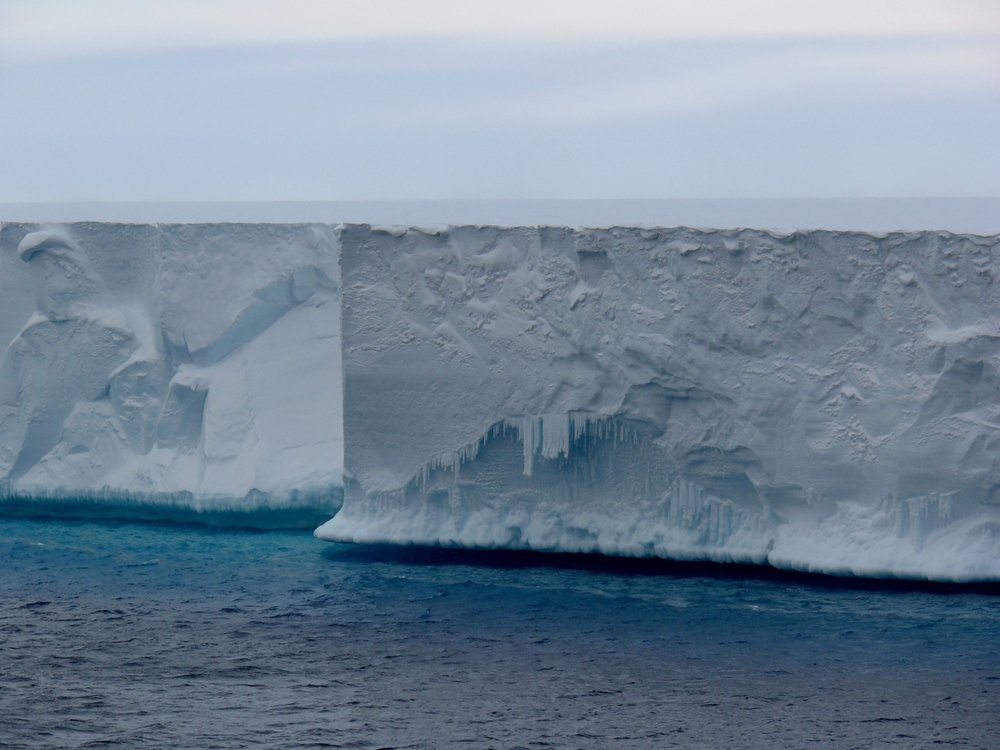
The Ross Ice Shelf is up to 600 meters thick, floats on the sea, and is larger than France. Along much of the coastline, this 800-kilometer-long ice barrier rises 20 to 50 meters above the ocean. It is one of the most extraordinary natural phenomena on Earth.

Ross Island and Mount Erebus
Ross Island is home to the historic huts of Scott and Shackleton, the McMurdo research station, and Mount Erebus — an active volcano with a persistent lava lake since the 1960s. These voyages offer views of the 3,000-meter-high volcano and, with good conditions, visits to one of the legendary explorer huts.
Subantarctic Islands
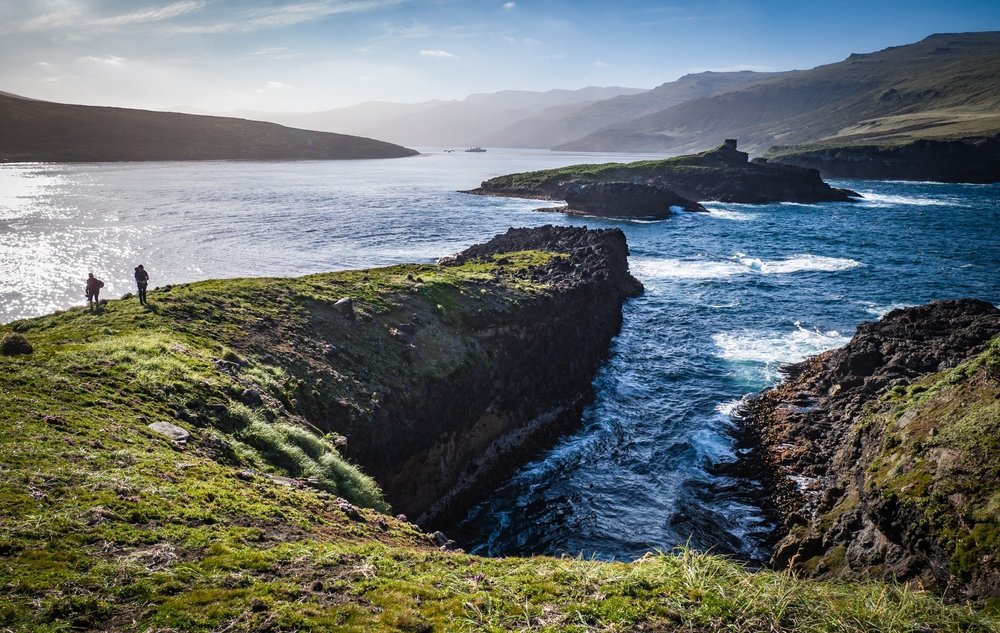
On the journey to or from the Ross Sea, you may visit remote subantarctic islands such as the Auckland Islands, Australia’s Macquarie Island, and New Zealand’s Enderby, Snares, and Campbell Islands. Rich in wildlife, they feel like a smaller South Georgia on the way to Antarctica.
Best Time to Visit the Ross Sea
The Ross Sea can only be visited during a very short Antarctic summer window, typically from late December to early March. Due to heavy sea ice and extreme remoteness, access is limited to a small number of long, expedition-style voyages each season.
Early Season (Late December–Early January)
At the start of the season, sea ice conditions are at their most challenging. Landscapes appear pristine and untouched, with vast ice fields and towering ice shelves dominating the scenery. This period offers a powerful sense of exploration and is ideal for travelers seeking raw, unspoiled Antarctic environments.
Mid-Season (January–February)
Mid-season provides the most reliable conditions for reaching the Ross Sea. Icebreakers and expedition vessels have the highest chance of accessing key sites such as Ross Island and historic huts. Wildlife activity increases, daylight remains long, and overall conditions are most favorable for landings and exploration.
Late Season (February–Early March)
Toward the end of the season, sea ice may begin to loosen slightly, depending on the year. Wildlife sightings remain possible, and changing light conditions create striking contrasts across ice, sea, and volcanic landscapes. Voyages during this period still require flexibility, reinforcing the true expedition nature of a Ross Sea journey.
Best Trips to the Ross Sea


Ready for the adventure of your life?
Reach out to us today and receive independent, expert guidance from passionate polar specialists who will assist you every step of the way from choosing the right expedition to booking and planning every detail of your journey. Here’s How It Works:
Listen & Advise
We listen and find out which ships, which routes and which price best suit your needs.
Reserve & Relax
Your cabin is reserved for at least 72 hours while you discuss the final details of your trip.
Prepare & Explore
You will receive expert packing tips, insider tips and more so that you can leave optimally prepared.
People Also Ask about the Ross Sea
The Ross Sea is one of the most remote and inaccessible regions in Antarctica. It can only be reached on sea voyages lasting at least 21 days departing from New Zealand, or on rare Antarctic semi-circumnavigation voyages of 32 days or more, typically in January and February. Outside this narrow window, ships cannot access the Ross Sea, which greatly limits the number of available departures.
Ross Sea voyages last a minimum of 21 days and present major logistical challenges for expedition ships. As a result, Ross Sea cruises typically start at around €28,000 per person for a standard cabin and exceed €35,000 for a suite. In return, you join one of the longest Antarctic expeditions to one of the most remote places on Earth. Only a few hundred travelers reach the Ross Sea each year, and only a very small number come from Germany.
Availability is limited and demand is high. Some of the most sought-after Ross Sea itineraries are already fully booked for the next two years, and waitlists are common. Planning well in advance and having patience is essential — but the experience is well worth the wait.
Semi-circumnavigation voyages often offer the best chance for a last-minute booking. These journeys are true Antarctic expeditions and may take you to places where very few, if any, people have ever set foot.
Yes. On the Antarctic Peninsula, summer temperatures around 0 °C are common. In the Ross Sea, temperatures can drop to –20 °C to –30 °C even during the Antarctic summer, although warmer days can occasionally occur. The Ross Sea is an extreme environment, but the reward is extraordinary.
Proper clothing is essential. You will receive a detailed packing list and expert packing advice from us to ensure you are fully prepared. Expedition teams on board also provide guidance on how to behave in these conditions.
The chances are good, but there is never a guarantee. Emperor penguins are wild animals, and encounters always depend on suitable weather conditions and a bit of luck.
As with all Antarctic travel, weather and ice conditions determine the route first, followed by decisions made by the captain. Expedition teams do everything possible to visit the historic huts of Scott and Shackleton on Ross Island. The good news is that these huts are among the most reliably accessible historic sites in the region. However, if ice or weather conditions do not cooperate, even the expedition team has limited options. Every season and every voyage is different.
McMurdo Station is the largest research base in Antarctica, with more than 1,200 people living there during the Antarctic summer. Before COVID-19, the U.S. station occasionally welcomed passengers from expedition ships. At present, visits to the base itself are not possible. However, you can visit the nearby Discovery Hut, located directly in front of the station. From the hut and the coastline, you have a clear view of McMurdo Station.
Yes, of course. That’s exactly what we’re here for. You can call us directly, send a message via the contact form, or request a free callback. Antarcticacruiseinfo.com is happy to answer all your questions about Antarctica and Ross Sea expeditions.