8 Penguins in Antarctica: Species and Where to See Them

Written by

Penguins are the headline act of any Antarctic or sub-Antarctic voyage. This guide cuts through the noise and shows you which penguin species you can see and exactly where to find them; from the Antarctic Peninsula and Weddell Sea to South Georgia and the Falkland Islands

In this article, we’ll outline the most notable Antarctic penguin species, explain their key habitats, and give practical tips on when and where travelers are most likely to encounter them during an expedition.

Let’s begin the journey into the world of penguins together.

8 Penguins in Antarctica

Penguins are among the most recognizable birds on Earth, perfectly adapted to life in the coldest environments. Unlike most birds, they cannot fly; instead, their strong flippers make them excellent swimmers, capable of diving deep to catch fish, krill, and squid. 

Antarctica and the surrounding sub-Antarctic islands are home to some of the largest penguin colonies in the world, where visitors can observe their fascinating behaviors up close. From nesting on rocky beaches to raising chicks on the ice, penguins are the true icons of the Southern Hemisphere’s polar regions.

In this article, we will focus on the penguin species that live in Antarctica and the surrounding sub-Antarctic regions, including:

  • Emperor Penguin
  • Adélie Penguin
  • Chinstrap Penguin
  • Gentoo Penguin
  • King Penguin
  • Macaroni Penguin
  • Rockhopper Penguin
  • Magellanic Penguin

Penguin Species and Where to See Them

1. Emperor Penguin

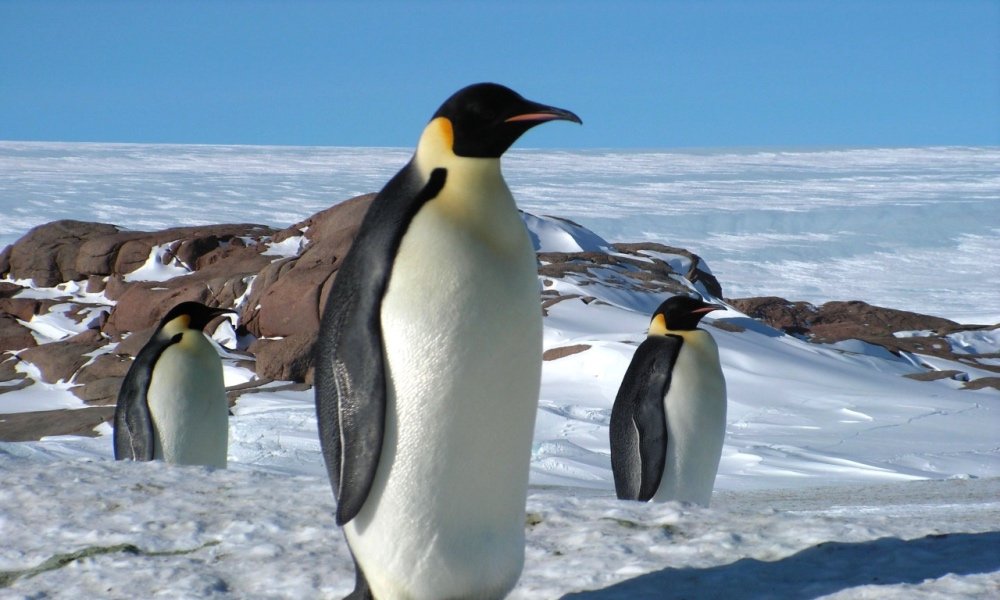
The Emperor Penguin (Aptenodytes forsteri) is the tallest and heaviest of all penguin species, reaching up to 120 cm in height. They are instantly recognizable by their black heads, golden-yellow neck patches, and upright stance. What makes them especially remarkable is their unique breeding cycle. Unlike other penguins, emperors breed during the harsh Antarctic winter, when temperatures can drop below –40°C and winds reach up to 200 km/h. Males famously incubate the eggs on their feet under a flap of skin for about two months while females travel to the ocean to feed. This extraordinary survival strategy has made the Emperor Penguin one of the true icons of Antarctica.

Distinctive Feature

They are the only penguin species that breeds in the Antarctic winter, enduring some of the harshest conditions on Earth.

Where Can I See Emperor Penguins?

Emperor Penguins are not commonly found along the Antarctic Peninsula like other species. The most reliable place to see them is Snow Hill Island in the Weddell Sea, accessible only through specialized expedition cruises with helicopter or icebreaker support.

2. Adélie Penguin

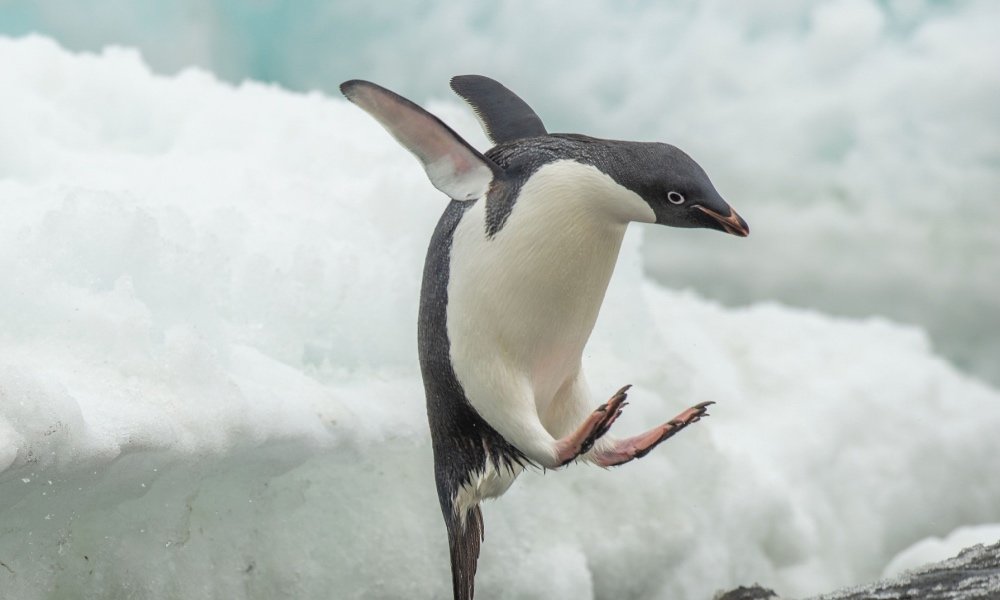
The Adélie Penguin (Pygoscelis adeliae) is one of the most widespread species in Antarctica, with colonies spread across the continent’s coastline. Small and energetic, Adélies stand about 70 cm tall and are instantly recognizable by their white eye rings and lively behavior. They are known for building nests out of small stones, which they carefully collect and even steal from neighbors. With their playful nature and sheer numbers -over 3 million pairs- they are among the most iconic penguins visitors can encounter on an Antarctic voyage.

Distinctive Feature

Recognizable by their white eye rings and stone nest-building behavior.

Where Can I See Adélie Penguins?

Adélie Penguins can be seen along much of the Antarctic Peninsula, in the Ross Sea region, and in colonies around the Antarctic Sound. Large groups are often spotted during landings and Zodiac excursions.

3. Chinstrap Penguin

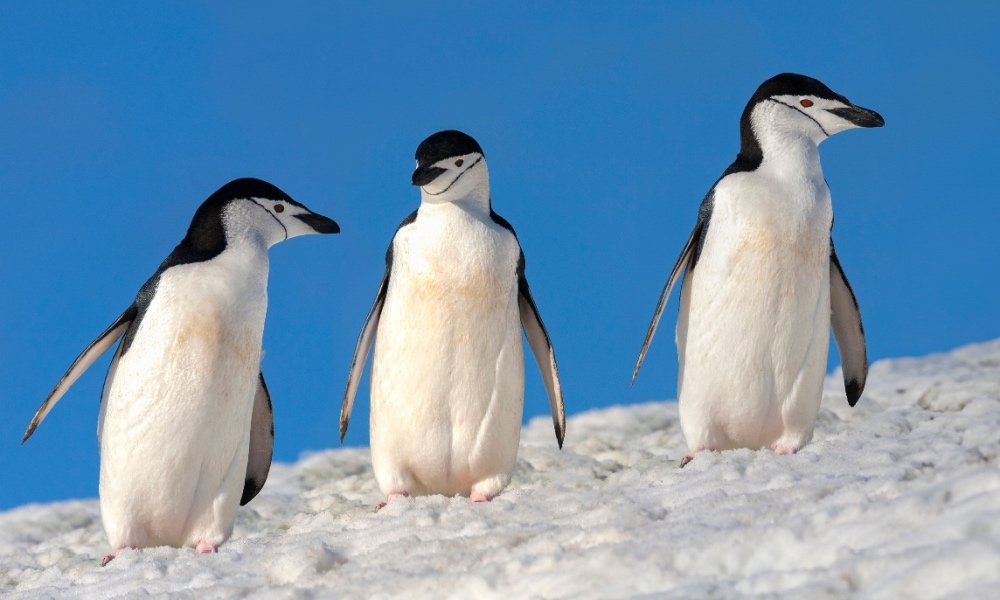
The Chinstrap Penguin (Pygoscelis antarcticus) is named after the thin black line running across its chin, making it look as if it’s wearing a helmet strap. Medium in size, they reach about 70–75 cm in height and are among the most abundant penguin species, with an estimated population of over 8 million pairs. Chinstraps are loud, social, and often found in huge colonies stretching across rocky hillsides. Their energetic nature and noisy calls make them a favorite sight on Antarctic cruises.

Distinctive Feature

A clear black “chinstrap” marking under the head, giving them their name.

Where Can I See Chinstrap Penguins?

They are most commonly seen on the South Shetland Islands, especially on Deception Island and King George Island, as well as along the Antarctic Peninsula. Large colonies can also be found on South Georgia.

4. Gentoo Penguin

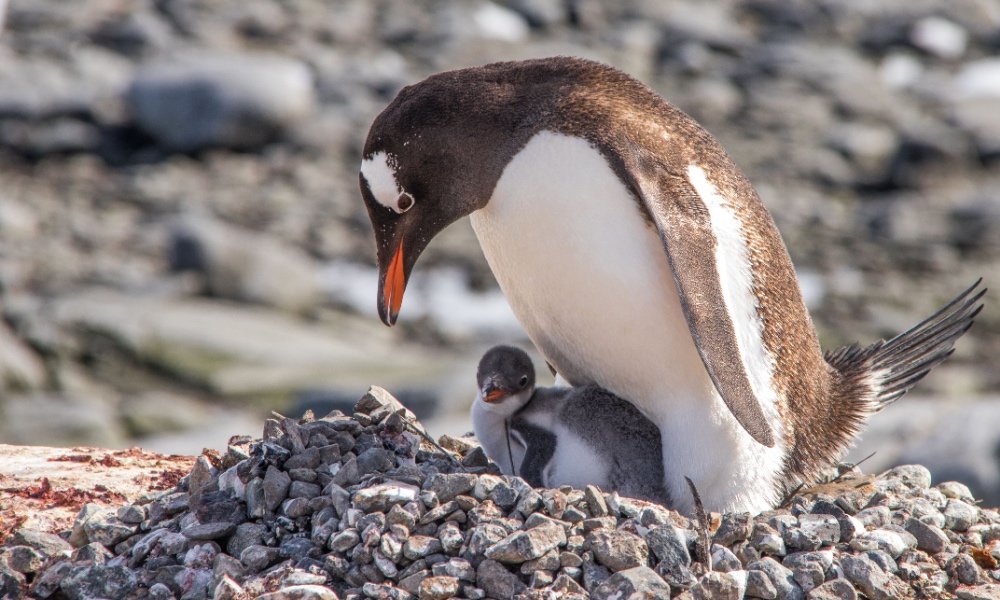
The Gentoo Penguin (Pygoscelis papua) is easy to recognize with its bright orange beak, white patch above the eyes, and long tail feathers that stick out behind as they walk. Standing around 75–90 cm tall, they are excellent swimmers; often reaching speeds up to 35 km/h, making them the fastest underwater penguins. Curious and less shy than other species, Gentoos are often seen waddling around landing sites, sometimes approaching visitors. They are also skilled nest-builders, using stones and grass when available.

Distinctive Feature

Their orange-red beak and long tail feathers make them easy to identify.

Where Can I See Gentoo Penguins?

Gentoo Penguins are widely found on the Antarctic Peninsula, the South Shetland Islands, and the Falkland Islands. Some of the largest colonies are located on South Georgia, where tens of thousands gather on the beaches.

5. King Penguin

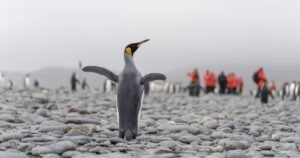
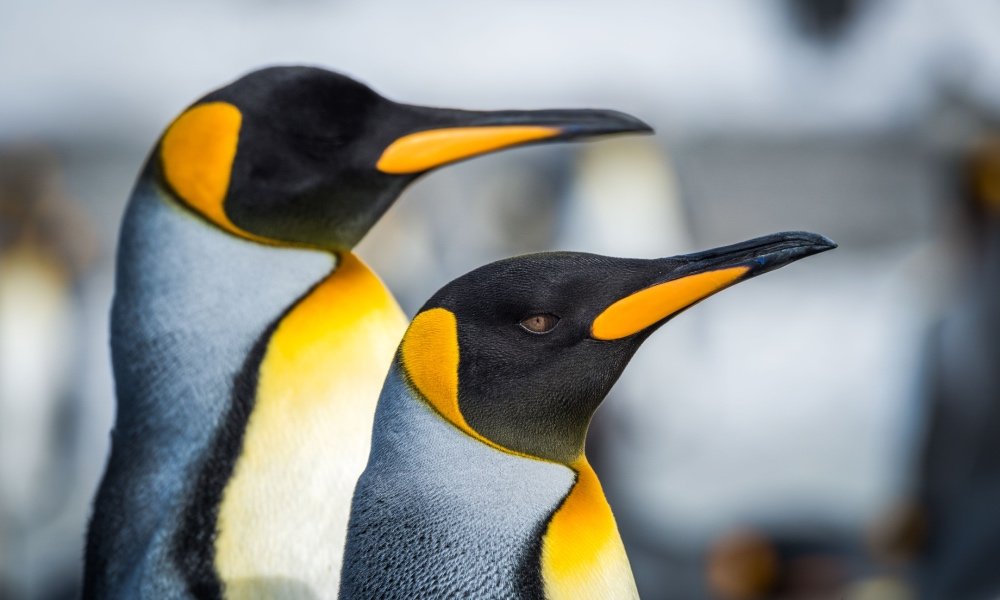
The King Penguin (Aptenodytes patagonicus) is the second-largest penguin species, reaching about 90 cm in height. They are known for their elegant appearance, with vivid orange-gold markings on the neck and upper chest. Unlike Emperor Penguins, Kings breed on sub-Antarctic islands rather than the Antarctic mainland. Their colonies are a breathtaking sight; stretching across beaches with hundreds of thousands of birds gathered together.

Distinctive Feature

Bright orange-gold neck patches and huge colonies on sub-Antarctic beaches.

Where Can I See King Penguins?

King Penguins are found mainly on South Georgia and the Falkland Islands, with smaller colonies on the Crozet and Prince Edward Islands. South Georgia is home to some of the largest colonies in the world, making it the prime destination to see them.

6. Macaroni Penguin

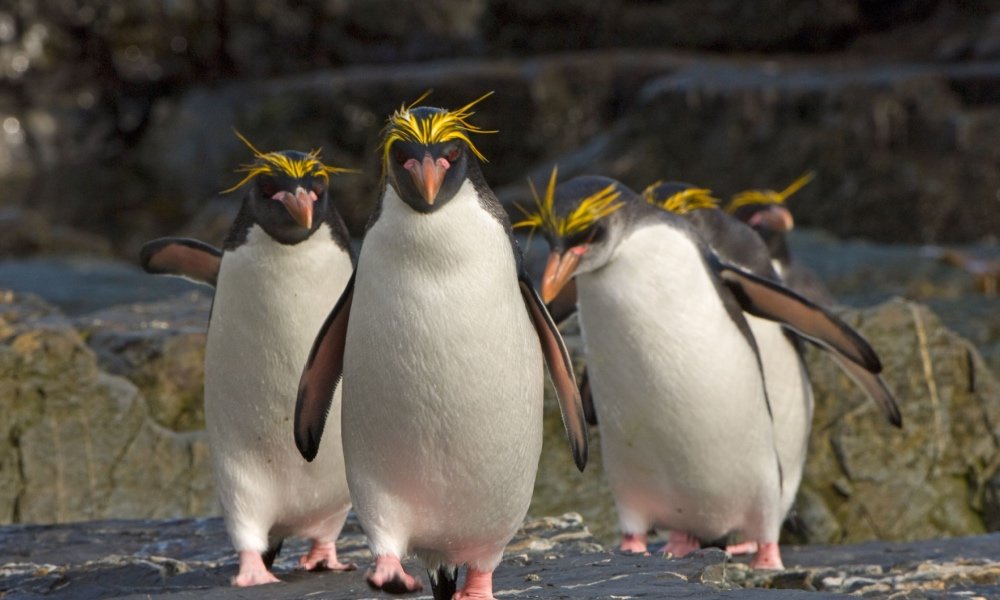
The Macaroni Penguin (Eudyptes chrysolophus) is one of the most distinctive penguin species, easily recognized by its striking yellow-orange crest feathers that contrast with its black head. Medium in size (around 70 cm tall), they are noisy and social, often forming massive colonies of tens of thousands. Macaronis are excellent climbers, nesting on rocky slopes where they scramble with surprising agility.

Distinctive Feature

Their bright yellow crest feathers, which give them a dramatic and unmistakable look.

Where Can I See Macaroni Penguins?

Macaroni Penguins are commonly found on South Georgia and other sub-Antarctic islands such as the South Sandwich Islands, the South Orkney Islands, and the Falklands.

7. Rockhopper Penguin

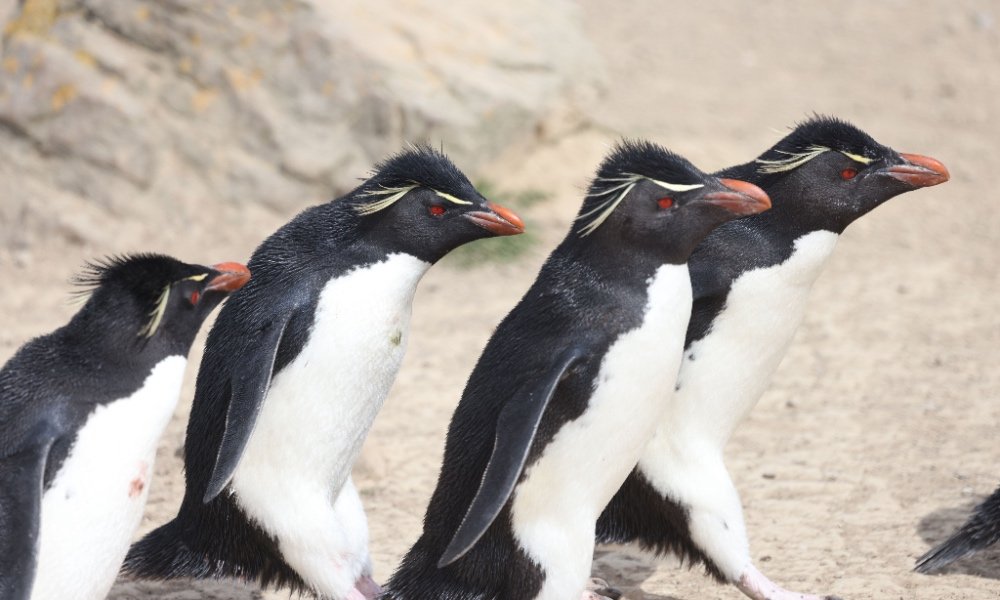
The Rockhopper Penguin (Eudyptes chrysocome) is a small but tough species, famous for its spiky yellow crest and bright red eyes. True to their name, Rockhoppers live among steep, rocky cliffs and are known for hopping from stone to stone with surprising speed and agility. Their bold character and quirky appearance make them one of the most entertaining penguins to watch.

Distinctive Feature

Their spiky yellow crest and habit of hopping across rocks instead of waddling.

Where Can I See Rockhopper Penguins?

Rockhopper Penguins are mainly found on the Falkland IslandsSouth Georgia, and other sub-Antarctic islands. They often nest in large colonies along rugged coastlines and cliffs.

8. Magellanic Penguin

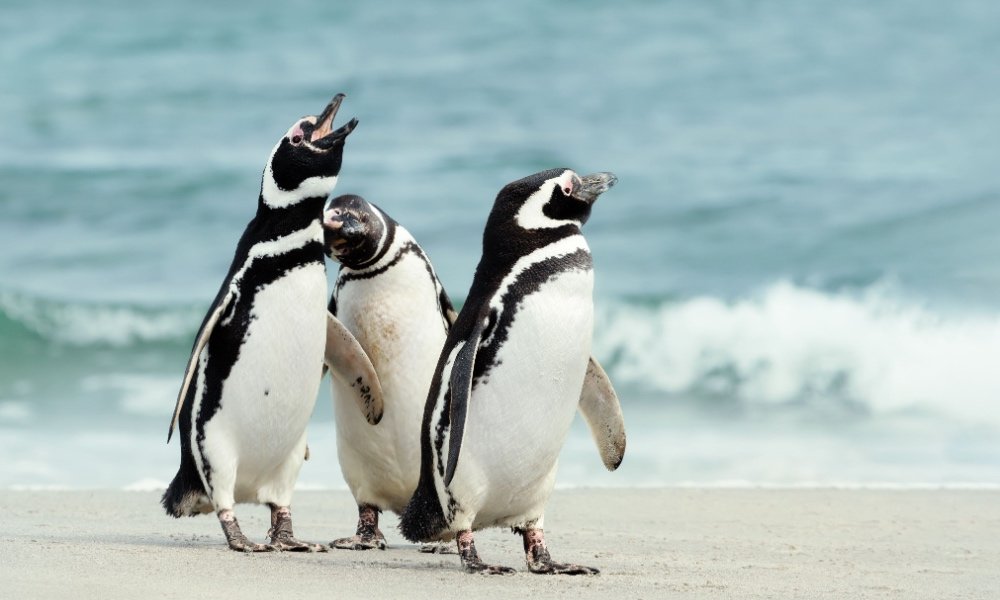
The Magellanic Penguin (Spheniscus magellanicus) is a medium-sized species named after the explorer Ferdinand Magellan, who first recorded them in the 16th century. They are easily identified by the two black bands across their chest and their loud braying calls, which sound similar to a donkey. Magellanic Penguins are burrow nesters, often digging tunnels in the soil or hiding under bushes to protect their chicks from the sun and predators.

Distinctive Feature

Two black chest bands and their distinctive donkey-like call.

Where Can I See Magellanic Penguins?

They are most commonly seen along the coasts of southern Argentina and Chile, particularly in Punta Tombo and Tierra del Fuego. Smaller colonies can also be spotted in the Falkland Islands, often visited on longer Antarctic cruise itineraries.

Extra Tip

Penguins Beyond Antarctica

Not all penguins live in Antarctica. Several fascinating species can be found in warmer or more temperate regions of the Southern Hemisphere. If you are traveling beyond the White Continent, keep an eye out for these:


  • Humboldt Penguin – Along the Pacific coasts of Chile and Peru.
  • Galápagos Penguin – The only penguin found north of the equator.
  • Royal Penguin – Breeding mainly on Macquarie Island near New Zealand.
  • Yellow-eyed Penguin – A rare and endangered species native to New Zealand.
  • Little Blue Penguin – The smallest penguin species, common in Australia and New Zealand.

These species are not part of the Antarctic ecosystem, but they add variety to the penguin world and are worth knowing about for curious travelers.

FAQ

Antarctic Penguins: Species and Where to See Them

Where can I see penguins in Antarctica?

The best places to see penguins in Antarctica are the Antarctic Peninsula, South Shetland Islands, and Weddell Sea, with Emperor Penguins mainly found on Snow Hill Island.

Where are all the penguins in Antarctica?

Penguins in Antarctica gather in large colonies along rocky, ice-free coasts, especially around the Antarctic Peninsula, South Georgia, and the Falkland Islands.

Where do all 17 species of penguins live?

Out of 17 species worldwide, eight live in Antarctica and the sub-Antarctic islands, while the rest are found in South America, New Zealand, Australia, and the Galápagos Islands.

What is the rarest penguin in Antarctica?

 The rarest penguin in Antarctica is the Emperor Penguin, as they breed deep in the Weddell Sea and can only be reached on specialized expedition cruises.

Where is the largest penguin colony in Antarctica?

Saint Andrews Bay in South Georgia with more than 200.000 Breeding Pairs (so usually more than 400.000 King Penguins).

Where can I see chinstrap penguins?

Chinstrap Penguins are best seen on the South Shetland Islands (especially Deception Island and King George Island), as well as on the Antarctic Peninsula.

Where is it best to see penguins?

The Antarctic Peninsula offers Adélie, Chinstrap, and Gentoo penguins, South Georgia is ideal for King Penguins, and Snow Hill Island is the prime spot for Emperor Penguins.

Are there king penguins in Antarctica?

King Penguins are not found on the Antarctic mainland but are abundant on sub-Antarctic islands such as South Georgia and the Falkland Islands.

Final Thoughts About Penguins in Antarctica

Penguins are the true icons of Antarctica, each species offering a glimpse into the unique wildlife of the polar world. From Emperor Penguins in the Weddell Sea to King Penguins on South Georgia, every encounter is unforgettable. With the right cruise route and timing, you can experience these remarkable colonies up close and take home memories of one of the world’s most extraordinary destinations

Now that you’ve learned everything about penguins, it’s your turn to take action and plan a journey to see them in their natural habitat!
Blog

Antarctica is not only the land of ice and penguins; it’s also

Read More
9 Sea Birds in Antarctica
Blog

Tiny, translucent, and often overlooked: Antarctic krill (Euphausia superba) are the true

Read More
Antarctic Krill
Blog

Few experiences compare to watching whales in the wild, and Antarctica is

Read More
6 Whales in Antarctica
Blog

The polar regions have always drawn those with courage, ambition, and a

Read More
11 Famous Polar Explorers: Legends of the Frozen Frontiers