
Seals are some of the most iconic animals you can encounter on an Antarctica cruise. Perfectly adapted to the extreme cold, they thrive in the icy waters of the Southern Ocean and can often be seen resting on ice floes or swimming gracefully near the shore. What makes them even more fascinating is that they are not afraid of humans: allowing close, breathtaking encounters that feel almost surreal. Six different species live in and around Antarctica, each with its own size, diet, breeding habits, and favorite habitats.
Let’s take a closer look at these extraordinary Antarctic seals and discover what makes each of them so special.
1. Weddell Seal
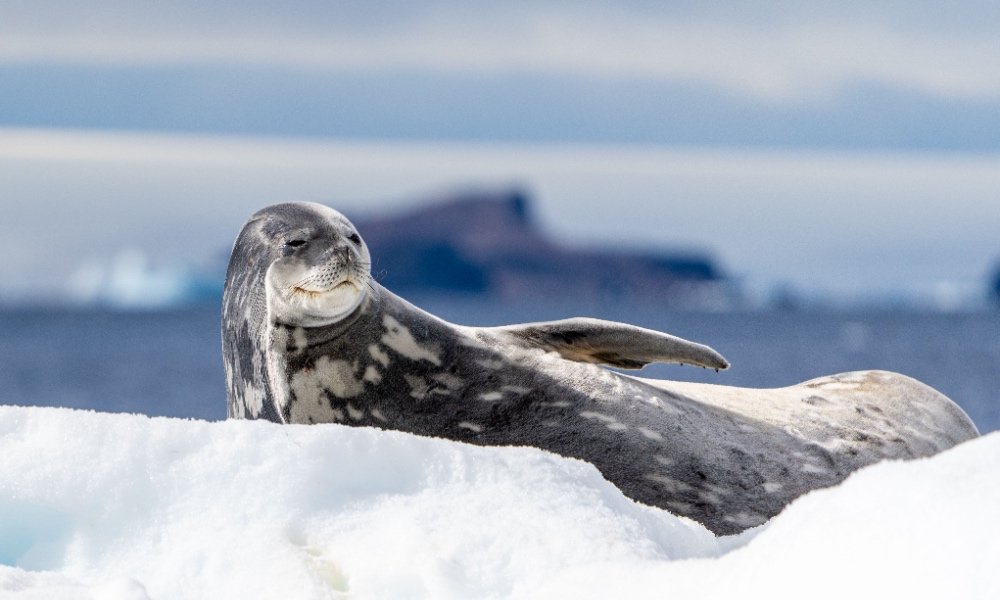
The Weddell seal is one of the most characteristic species of Antarctica and a favorite among travelers. Known for its calm nature and large dark eyes, it often rests on ice floes near the coast. These seals are perfectly adapted to life under the ice, where they hunt and even sing hauntingly beautiful sounds that can sometimes be heard through the frozen surface.
Size, Weight & Feeding
Grows up to 2.5–3 meters and weighs 400–600 kg. They mainly eat fish, squid, and other marine life found beneath the sea ice.
Breeding Season
Pups are usually born between October and November on stable sea ice. Mothers are known for their attentive care.
Where to See Them
Common around the Antarctic Peninsula, the Ross Sea, and coastal ice floes—often spotted during Zodiac landings.
Why Are They Special?
Famous for their incredible diving ability (up to 600 meters deep) and their unique underwater songs, Weddell seals allow visitors unusually close encounters in one of the harshest places on Earth.
2. Leopard Seal
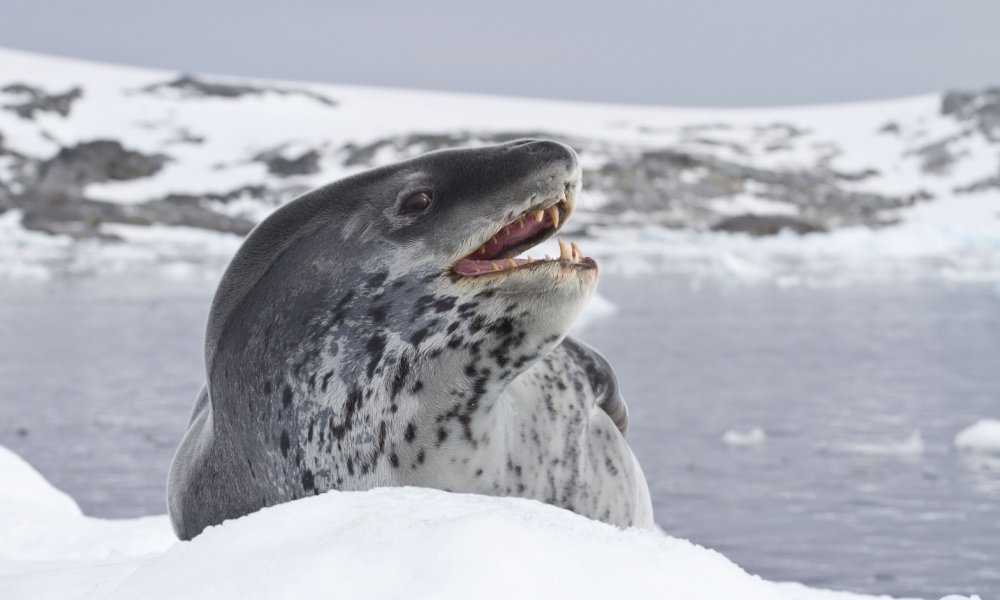
The leopard seal is one of Antarctica’s top predators and the most impressive seal you can encounter on the ice. With its long, sleek body and powerful jaws, it looks almost reptilian compared to other seals. Despite its fearsome appearance, travelers are often fascinated to watch it patrolling near penguin colonies or resting alone on the pack ice.
Size, Weight & Feeding
Can reach 3–3.5 meters in length and weigh up to 500 kg. Unlike other seals, it feeds on penguins, fish, squid, and even other seals, making it one of the Southern Ocean’s apex predators.
Breeding Season
Mating occurs in the water during December to January, and pups are usually born on the ice in late summer.
Where to See Them
Frequently spotted near the Antarctic Peninsula and around penguin rookeries. They are often seen during Zodiac cruises, sometimes swimming curiously alongside.
Why Are They Special?
Leopard seals are both feared and admired. Watching one hunt penguins or glide silently under the ice is a reminder of Antarctica’s raw, untamed wilderness.
3. Crabeater Seal
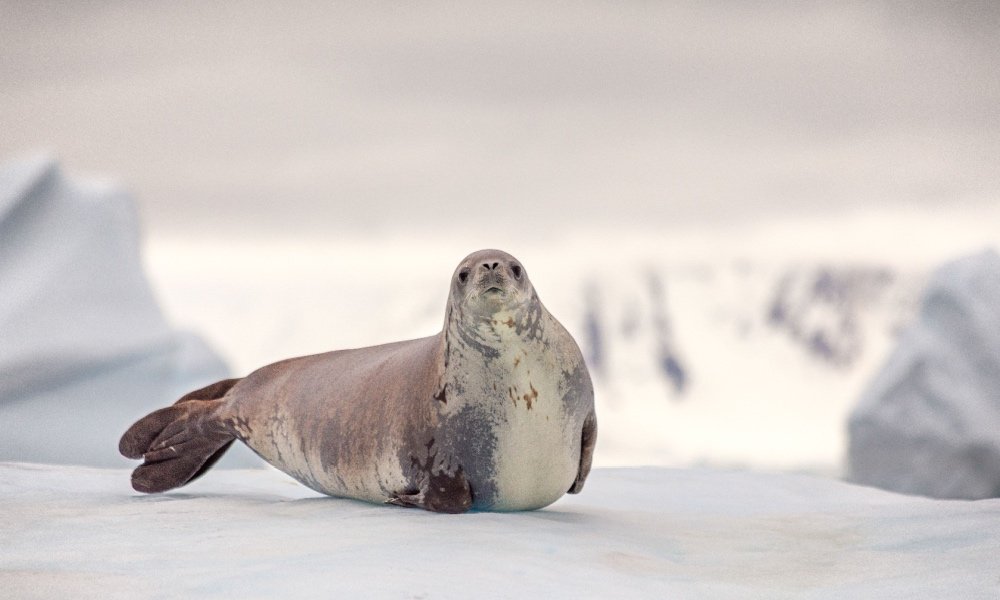
Despite its misleading name, the crabeater seal doesn’t eat crabs at all: it feeds almost entirely on Antarctic krill. With a population estimated at more than 15 million, it is by far the most numerous large mammal in Antarctica after humans. They are slender, light-colored seals, often seen in groups resting together on ice floes.
Size, Weight & Feeding
Grows up to 2.5 meters in length and weighs around 200–300 kg. Their specialized teeth act like a sieve, filtering huge amounts of krill from the water.
Breeding Season
Pups are born from September to October on the pack ice, and quickly learn to swim alongside their mothers.
Where to See Them
Widely distributed across the Antarctic Peninsula and pack ice regions, often in large numbers.
Why Are They Special?
They are the most abundant seal species on Earth, yet only found in Antarctica. Spotting crabeater seals lounging in big groups offers travelers a rare glimpse into the sheer richness of Antarctic wildlife.
4. Elephant Seal
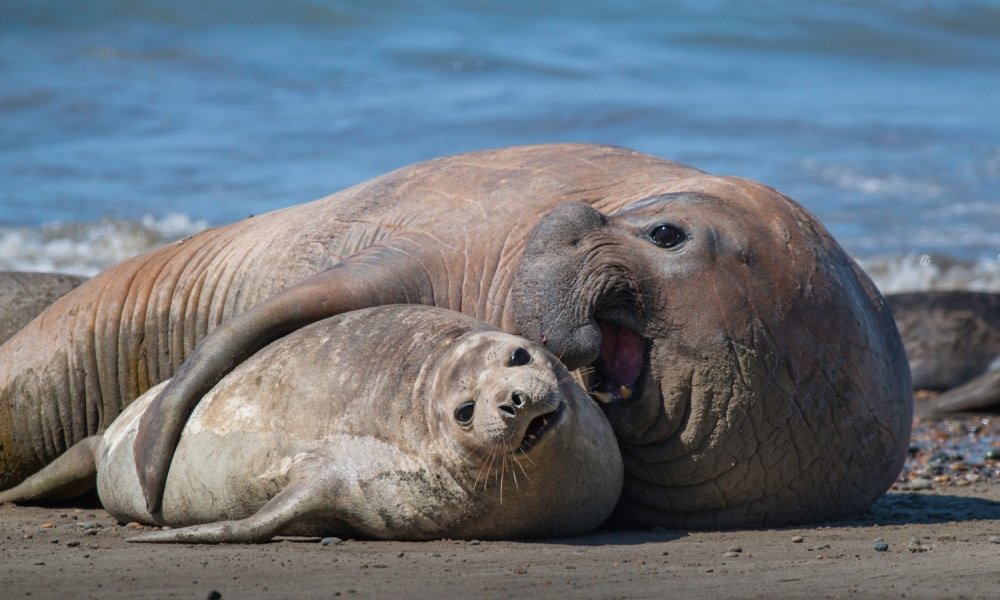
The southern elephant seal is the largest seal in the world and one of the most dramatic animals to see in the sub-Antarctic. Named for their trunk-like noses, males can be truly gigantic and are famous for their loud roaring battles during the breeding season. Watching these colossal animals up close is a highlight of many South Georgia landings.
Size, Weight & Feeding
Adult males can reach up to 6 meters in length and weigh over 3,500 kg, while females are much smaller at around 600–800 kg. They dive deep—sometimes more than 1,500 meters—to feed mainly on squid and fish.
Breeding Season
Breeding takes place from September to November on sub-Antarctic beaches, where huge harems form and dominant males fight fiercely for control.
Where to See Them
Best seen on South Georgia and the Falkland Islands, though small groups can also be found on Antarctic Peninsula beaches.
Why Are They Special?
Their sheer size and the sight of hundreds gathered on a beach make elephant seals unforgettable. Witnessing their roaring contests is one of the rawest wildlife spectacles in the Southern Ocean.
5. Antarctic Fur Seal
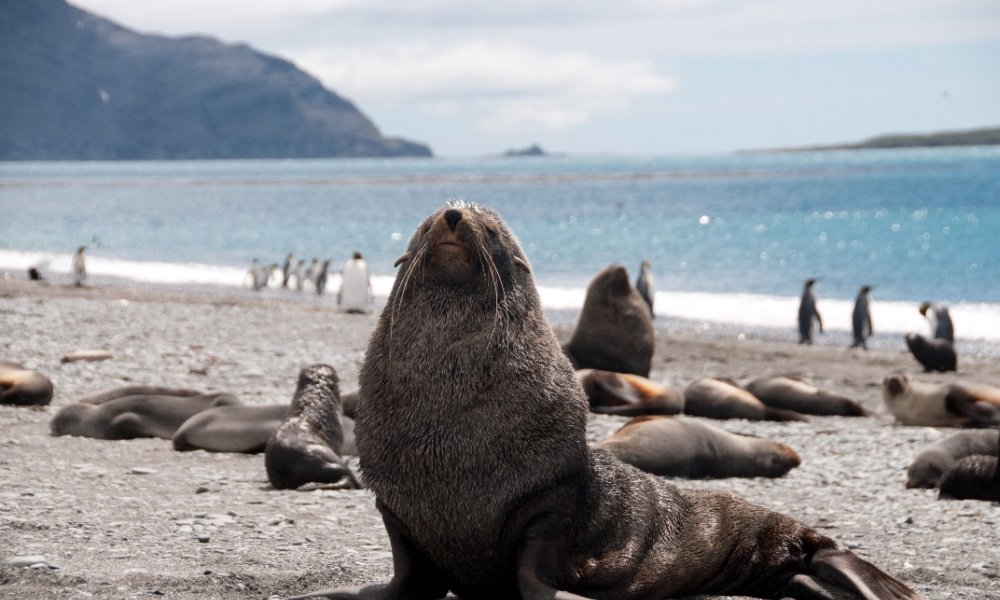
The Antarctic fur seal is smaller and more agile than the other seals of the region, yet full of character. With their dog-like faces, thick fur, and curious behavior, they are a favorite among photographers and travelers alike. Once heavily hunted for their pelts, their populations have made a remarkable recovery and are now thriving on sub-Antarctic islands.
Size, Weight & Feeding
Males grow up to 2 meters long and weigh around 150–200 kg, while females are much smaller, averaging 1.2 meters and 30–50 kg. They mainly feed on krill, fish, and squid.
Breeding Season
Mating occurs between November and January. Males establish territories on beaches and defend harems of females, often with noisy confrontations.
Where to See Them
Most commonly found on South Georgia, the Falkland Islands, and other sub-Antarctic islands. They are less frequent on the Antarctic Peninsula itself.
Why Are They Special?
Their playful nature, large colonies, and recovery from near extinction make them one of the most inspiring wildlife stories of the Southern Ocean.
6. Ross Seal
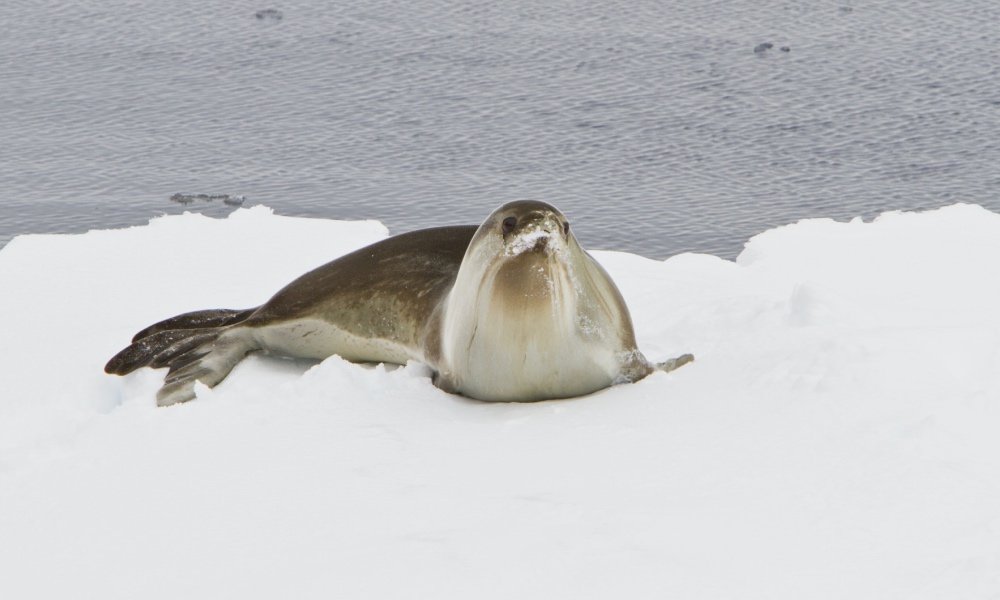
The Ross seal is the rarest and least-studied of all Antarctic seals. Solitary and elusive, it lives deep within the pack ice of the Southern Ocean. With its short snout and large eyes, it has a distinctive look, and its eerie, siren-like calls echoing across the ice make it one of the most mysterious creatures of Antarctica.
Size, Weight & Feeding
Adults grow up to 2–2.5 meters and weigh between 200–220 kg. They primarily feed on squid and fish, diving under the thick pack ice to hunt.
Breeding Season
Pups are born in November and December on remote pack ice, making them rarely observed by travelers.
Where to See Them
Mostly found in the Ross Sea and deep pack ice regions, sightings are very rare and considered a highlight of any expedition.
Why Are They Special?
Their scarcity and haunting vocalizations make them a truly unique encounter, an unforgettable reminder of how vast, remote, and mysterious Antarctica remains.
Extra info
Why Are Seals Important for Antarctica’s Ecosystem?
Seals play a vital role in maintaining the balance of Antarctica’s fragile ecosystem. As top predators, species like the Leopard Seal regulate penguin and fish populations, while krill-eating species such as the Crabeater Seal help shape the dynamics of the Southern Ocean food web. With millions of individuals, seals also serve as prey for orcas, linking different levels of the marine ecosystem.
Their presence is a sign of a healthy environment—without seals, the balance between krill, fish, and larger predators would be disrupted. Protecting seals through the Antarctic Treaty System is therefore essential to safeguarding the breathtaking wildlife encounters that make an Antarctica cruise so unique.
FAQ
About Seals in Antarctica
Yes, Antarctica is home to six seal species, including Weddell, Leopard, Crabeater, Ross, Elephant, and Fur seals. On our website, you’ll find detailed guides on where to see them during an Antarctica cruise and what makes each species unique.
The Southern Elephant Seal is the largest, with males reaching up to 6 meters and 3,500 kg. You can often see them in huge colonies on South Georgia and the Falkland Islands—destinations we cover extensively in our Antarctica travel guides.
The Ross Seal is the rarest and most elusive. Living deep in the pack ice, it is seldom seen by travelers. Our site explains where and when lucky expedition cruises may spot this mysterious species.
Yes, the Leopard Seal is one of Antarctica’s top predators, often found around penguin colonies on the Antarctic Peninsula. On our website, we show you how and where to best experience this dramatic encounter.
If any species deserves that title, it’s the Weddell Seal, famous for diving up to 600 meters and holding its breath for over an hour. Discover more about their incredible adaptations in our detailed Antarctica wildlife section.
The Elephant Seal is not only the largest but also the strongest, with dominant males fighting fierce battles during breeding season. Learn where to witness this raw display of nature in our expert Antarctica cruise guides.
In Antarctica, seals are surprisingly unafraid of humans. Whether it’s a group of Crabeater Seals lounging on the ice or a curious Weddell Seal near your Zodiac, travelers often enjoy close, breathtaking encounters. For tips on seeing seals responsibly, explore our Antarctica tours & wildlife guides.
Final Thoughts About Seals in Antarctica
Seals are more than just a highlight of any Antarctica cruise: they are key players in one of the most delicate ecosystems on Earth. From the abundant crabeater seals shaping the krill populations, to the powerful leopard seals keeping penguin numbers in check, and the elusive Ross seal reminding us of Antarctica’s mystery, each species tells a unique story. Their presence is a sign of balance in the Southern Ocean and a symbol of life thriving in one of the harshest environments imaginable.
For travelers, seeing these animals up close is an experience like no other. Unlike in other parts of the world, seals here are not afraid of humans, which makes encounters intimate, surreal, and deeply moving. They bring Antarctica’s icy landscapes to life and turn every landing into a memory you’ll carry forever. Protecting them ensures that future generations can share in this wonder and it’s what makes your journey not just a trip, but a once-in-a-lifetime connection to the wild heart of our planet.